
01 / DISCOVER
Diagnose before designing.
Understand the business challenge, the work, the people, the context and the evidence before deciding what to build.
Helping organisations understand what is getting in the way of performance — and design the right combination of capability, learning, experience and technology to change it.


A request for training is a hypothesis, not a diagnosis. I start by understanding the business objective, where performance is breaking down, who is affected, and what evidence would tell us that something changed.
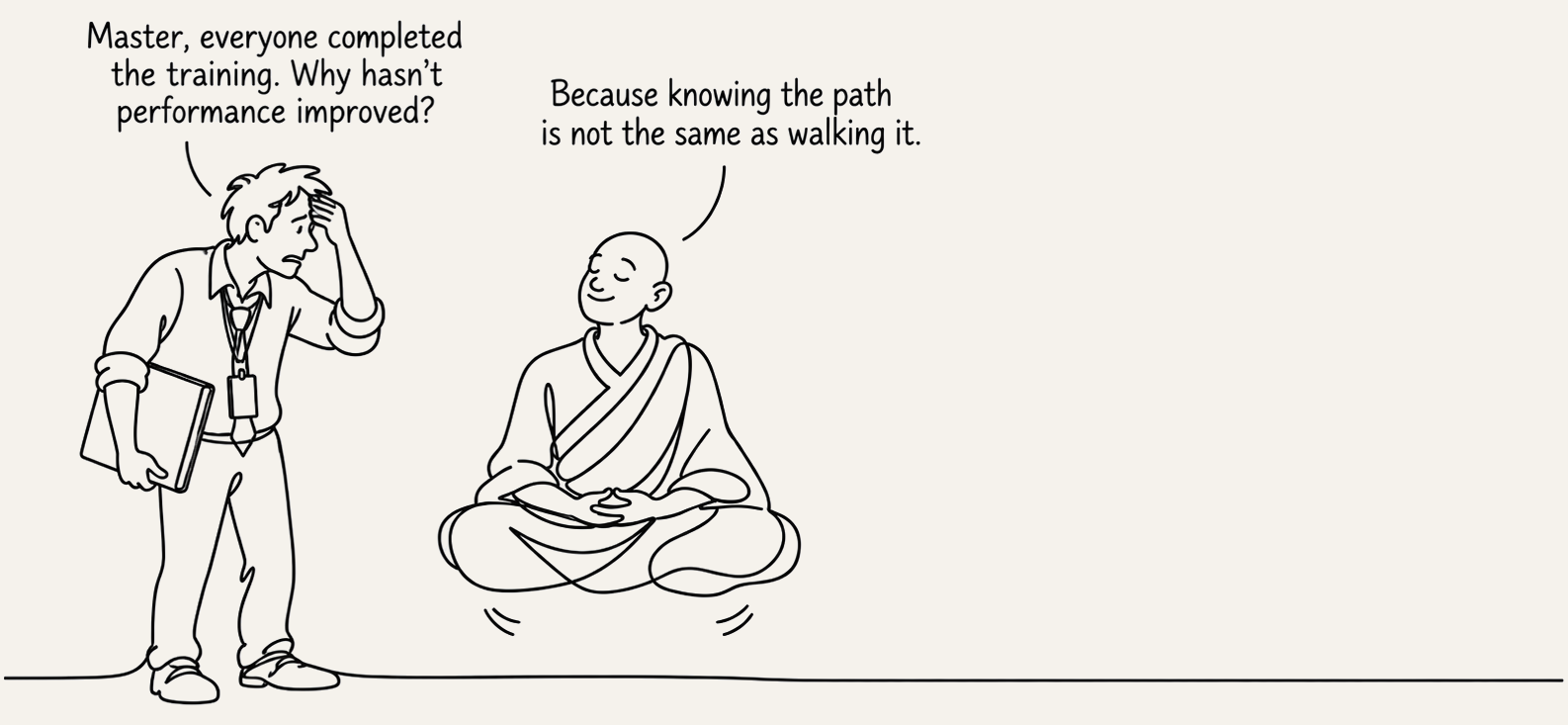
Understand the business challenge, the work, the people, the context and the evidence before deciding what to build.
Separate the requested solution from the underlying need. Define what people need to do differently and what is preventing that today.
Move beyond awareness and recall. Create opportunities to practise, make decisions, get feedback and apply learning in context.
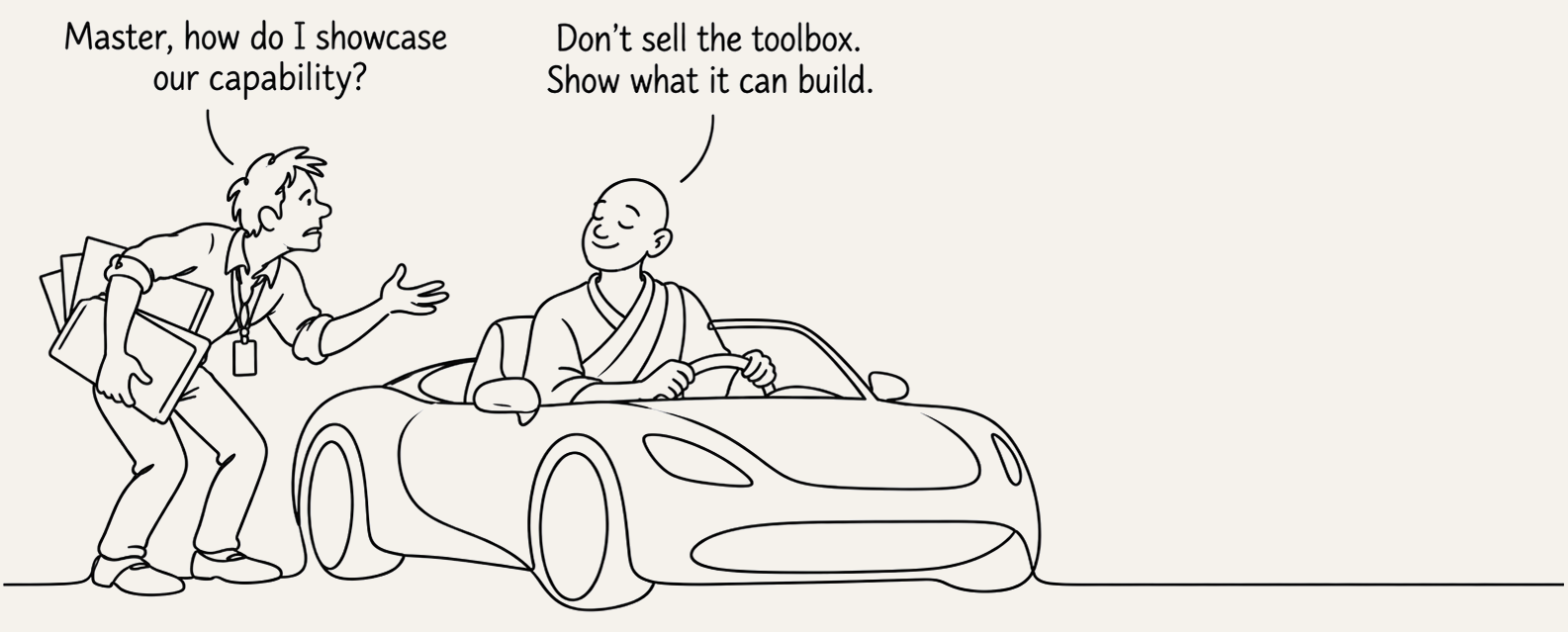
Digitising an old experience is not transformation. Use technology where it changes access, practice, support, collaboration or performance.
Four deeper cases show how I approach performance support, application learning, visual explanation and experiential learning. The emphasis is not on the format produced, but on the problem framed, the design decision made, and the experience created.
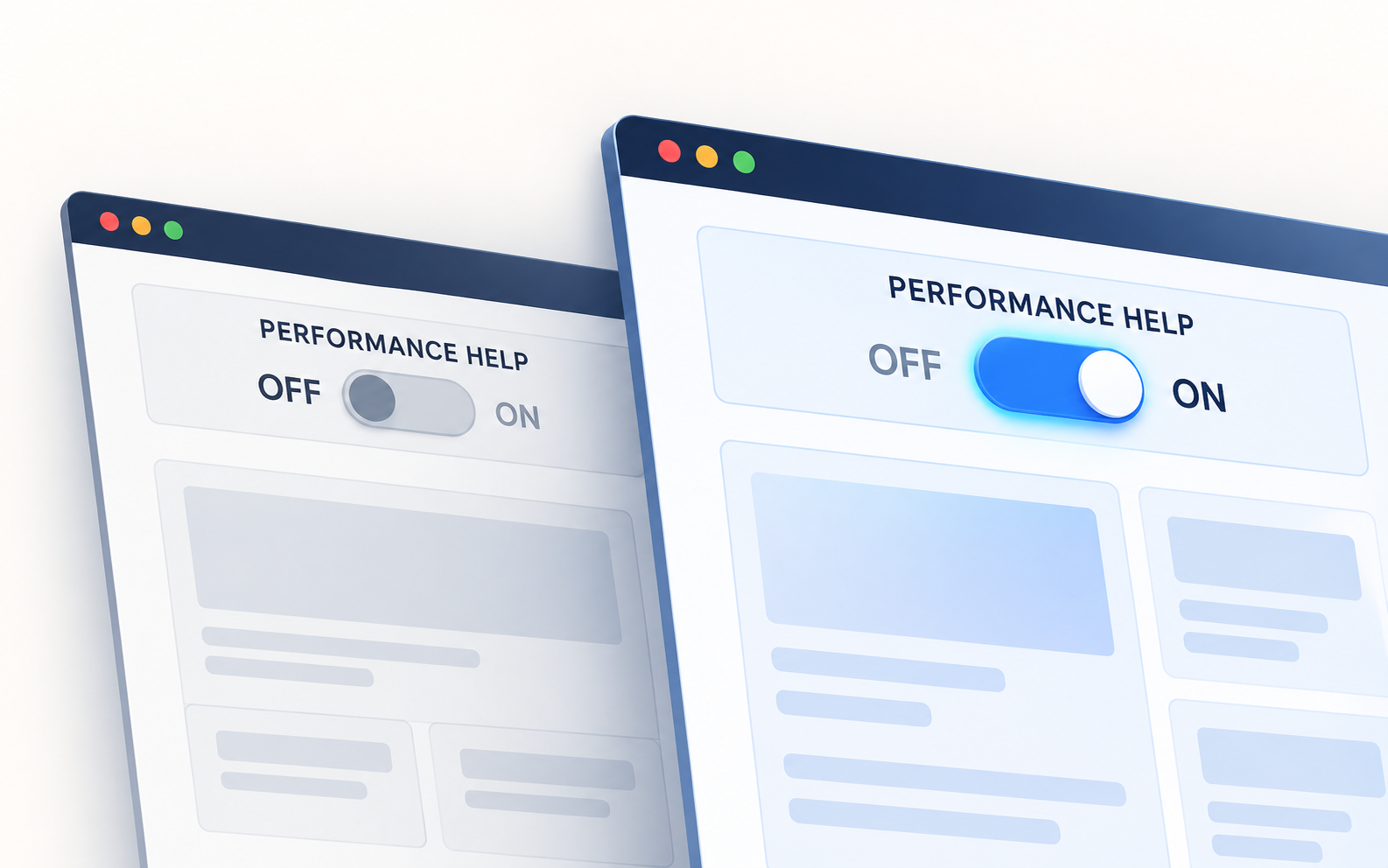
A complex enterprise environment was generating large volumes of support tickets. Instead of retraining everyone, we analysed where users were struggling and embedded the smallest useful intervention at those moments.

A complex scientific application became part of a realistic court-case scenario. The learner used the application as a scientist would: to examine information, make decisions and progress the case.
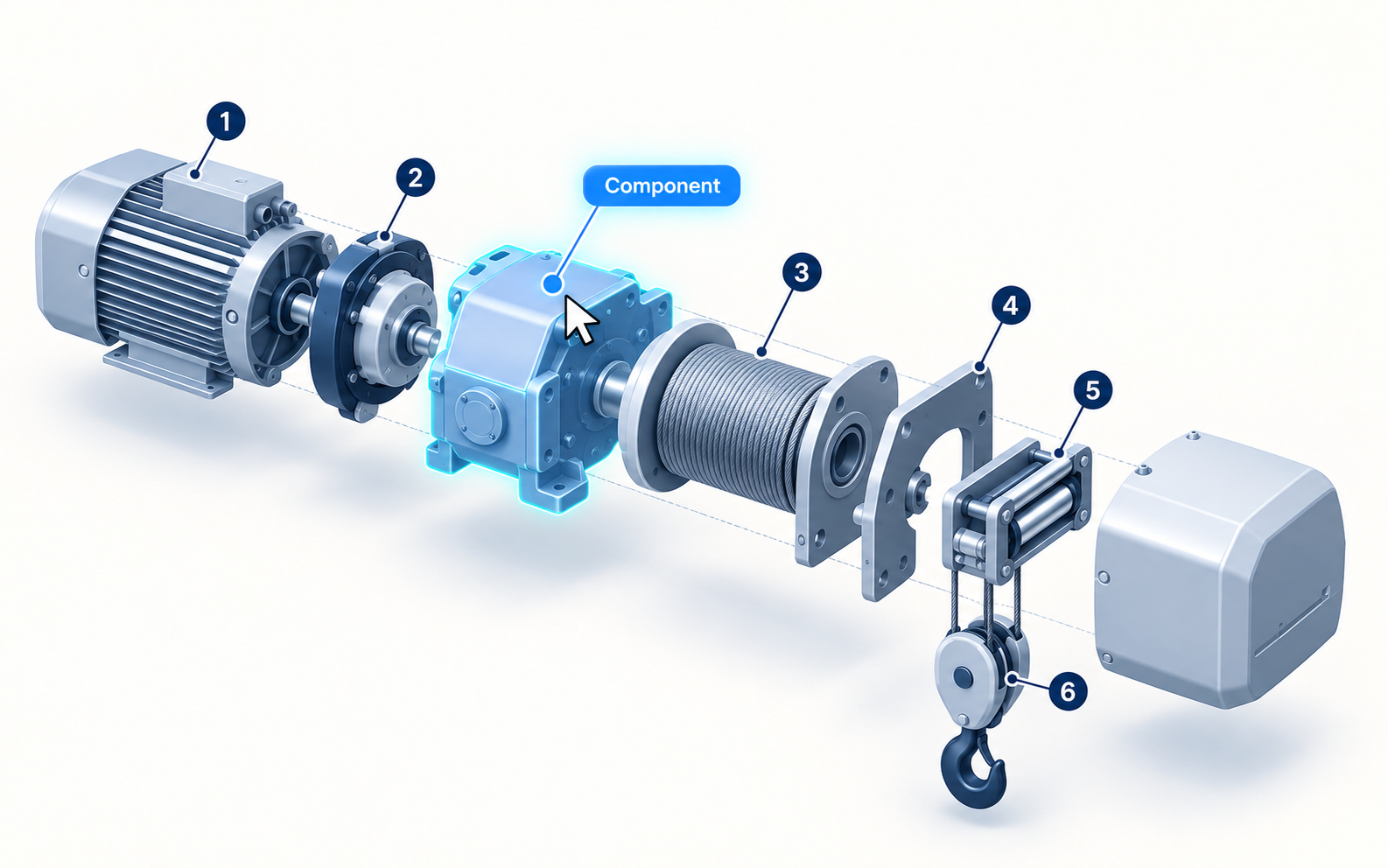
Interactive exploded views and virtual assembly changed the experience from finding information to exploring how components relate and fit together.
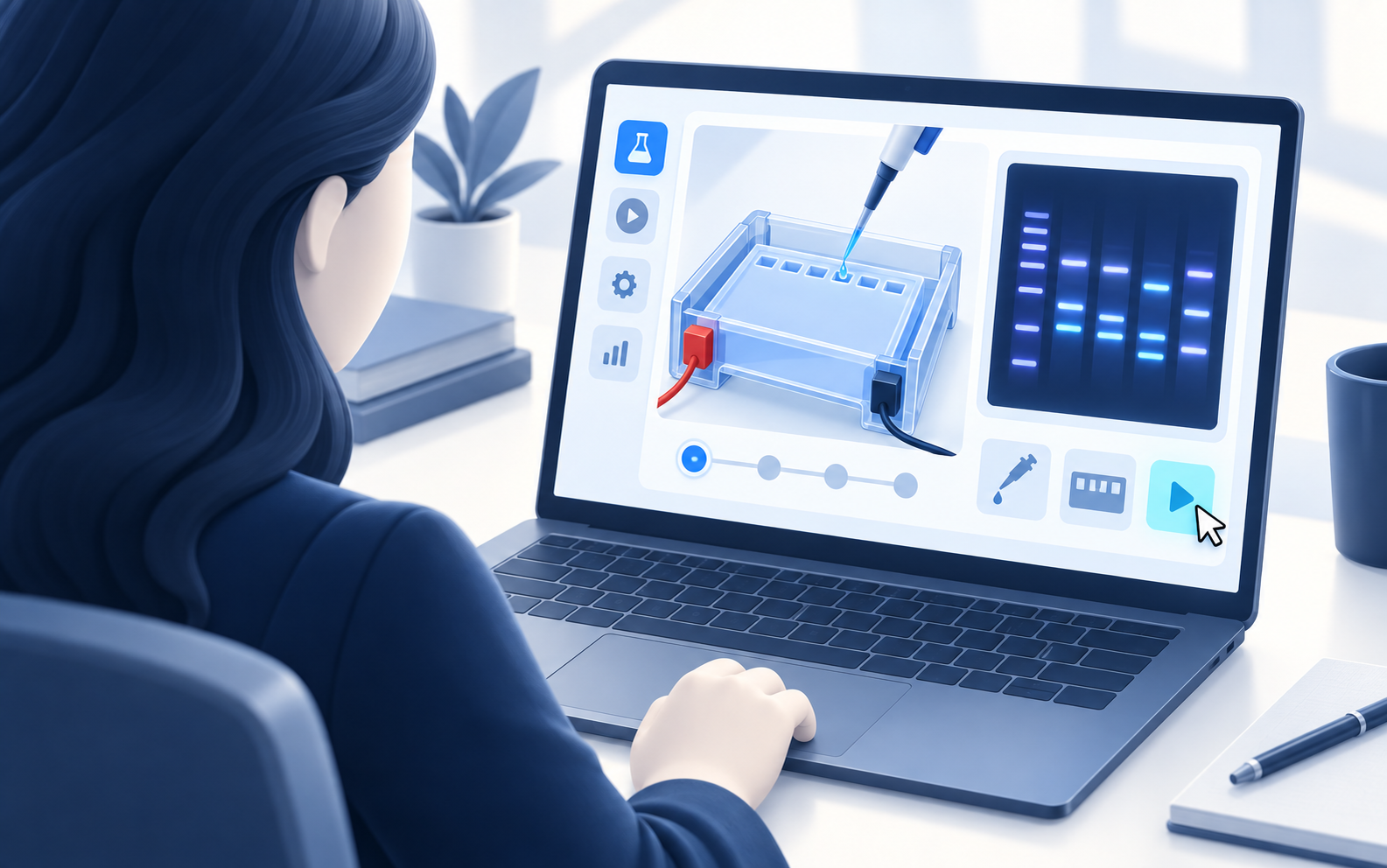
An immersive biotechnology course for non-scientists used animation and virtual-lab activities to make abstract scientific processes observable and actionable.
Learning at scale requires more than good instructional design. It needs the right team shape, delivery model, governance, capacity plan and commercial model.
Plan multidisciplinary teams across analysis, design, visualisation, development, QA and project management. Ramp capacity as work moves from discovery to production and then into QA and release.
Predictive, Agile and hybrid approaches are tools — not identities. Stable requirements and sequential dependencies favour predictive planning; evolving solutions and frequent feedback favour iteration. Many learning programmes need both.
Predictive ↔ Hybrid ↔ Agile
My view: large-volume production or conversion work often belongs in a resource/T&M model. A repeatable learning solution that behaves like a product — for example, a design-thinking programme — should increasingly be positioned around the value it creates, not merely the people-hours required to build it.
| Resource / T&M | Deliverable-based | Value / product-based | |
|---|---|---|---|
| Best fit | Large, ongoing or conversion-heavy production | Defined output with clear acceptance criteria | Repeatable solution with identifiable organisational value |
| Input clarity | Can be low or variable | Moderate to high | Problem and value need clarity; execution can still iterate |
| Main risk | Utilisation and productivity | Scope change and estimation | Overcommitting to outcomes the provider cannot control |
| Profit logic | Capacity × utilisation × rate | Estimate vs delivery efficiency | IP, reuse, differentiation and value captured |
| Illustrative example | Modernising 300 legacy courses | Build 12 role-based modules | Reusable Design Thinking learning product |
A useful rule: do not accept accountability for an outcome you cannot meaningfully influence. Commercial upside should reflect the risk the provider actually takes.
These are working principles, shaped by project experience rather than slogans.
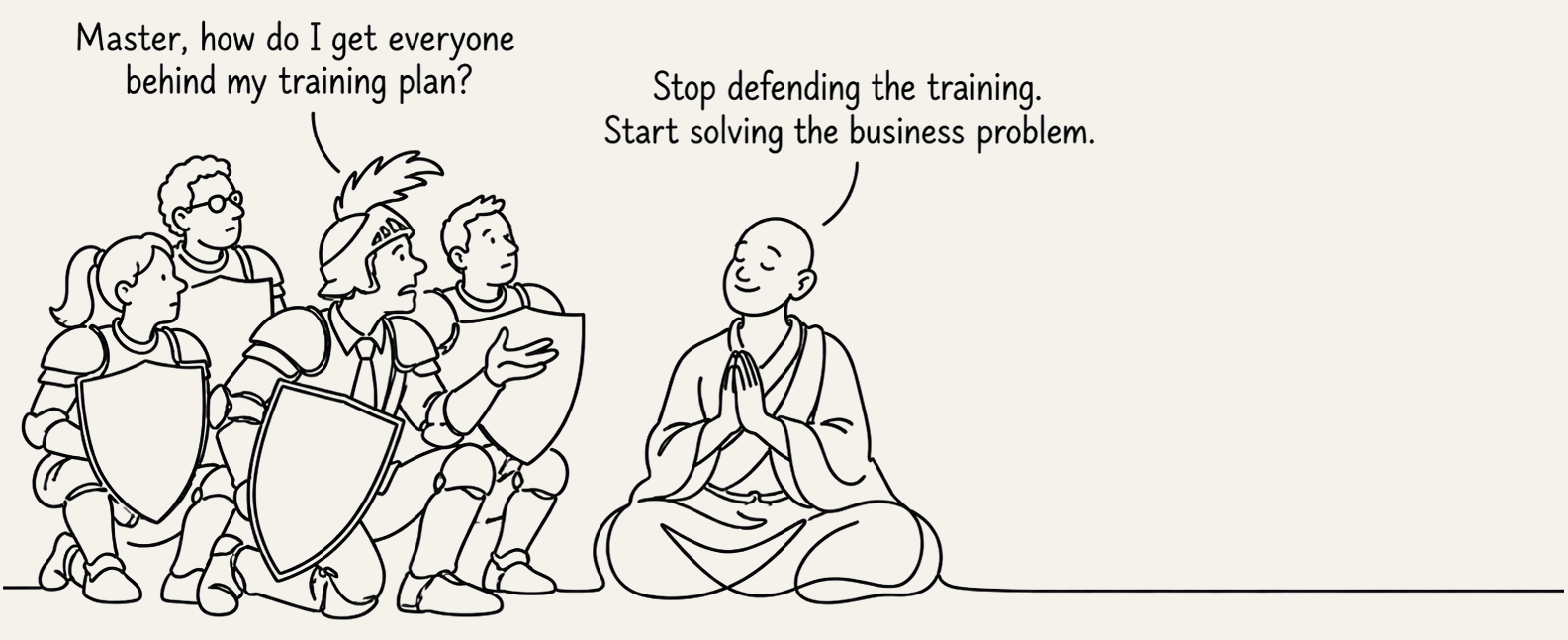
Sometimes the better answer is workflow support, better information, a changed process or a redesigned experience.
Digitisation changes the container. Transformation changes how people understand, practise, decide or perform.
The useful question is what someone can do differently afterwards — and whether the workplace enables them to do it.
Software training becomes more useful when application functions are learned inside realistic decisions and tasks.
Choose a delivery model based on uncertainty, dependencies, feedback needs and the economics of the work.
When a solution is reusable and has clear organisational value, its commercial model should not be limited to the hours needed to build it.
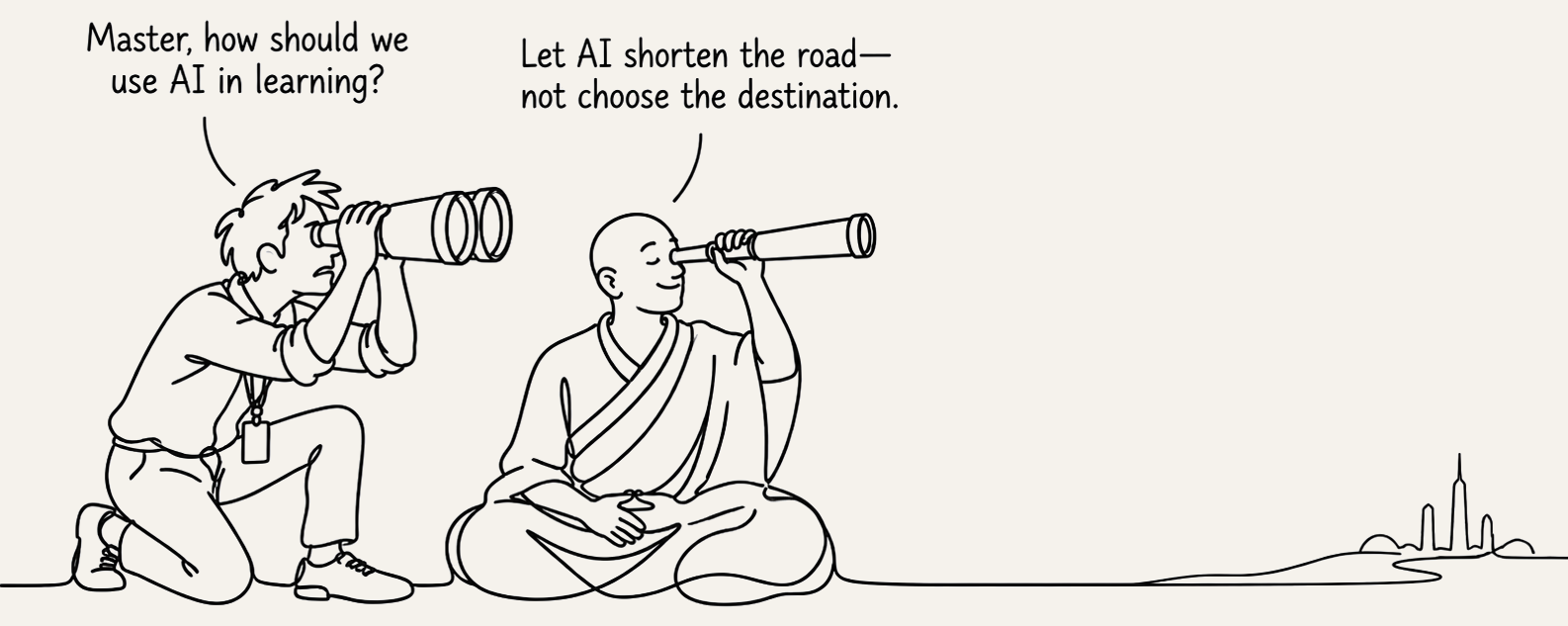
The more capable AI becomes, the more important it is to decide what should be delegated, what must be verified, and where human context, ethics, judgement and accountability remain essential.
I've spent more than two decades working across instructional design, visual communication, simulations, digital learning, performance support, learning technology, project delivery and capability building.
The common thread has been a simple question: How do we help people do something better?
A small set of external references that connect with the thinking on this site.